



The Best Bottles for Storing Homemade Infused Oils and Vinegars

Infusing oils and vinegars is a fantastic way to add a burst of flavour to your culinary creations. Let's discuss choosing the right bottles for infused oils that lock in the flavour and keep your produce fresh!
For optimal quality and longevity, the storage of your infusions is absolutely crucial. Whether you're experimenting with a robust chilli-garlic oil or a subtle basil vinegar, how you store it can make all the difference.
Use glass bottles and keep them in a cool, dark place, as both light and heat can deteriorate the flavours and reduce shelf life.
Proper storage isn't just a matter of taste—it's about maintaining the quality of every drop. Let’s talk about choosing a proper storage container to keep your infused oils and vinegars fresh, flavourful, and ready for action.
Why Bottle Selection Matters for Infused Oils and Vinegars
Choosing the right bottle for infused oils and vinegars may seem straightforward. However, it plays a critical role in preserving taste, safety, and freshness. Oils, especially, need proper airtight storage to avoid exposure to air and light, which can cause rancidity and off flavours.
Vinegars are slightly more resilient but still benefit from bottles that minimise air and light exposure, which can dull their flavour. And here’s a critical point: certain flavours and ingredients can breed bacteria when mixed with oil and not stored correctly. You’ll want to be sure your storage method reduces any risk of spoilage
Best Materials for Storing Infused Liquids
For storing oils and vinegars, glass is the gold standard. It’s non-reactive, which means it won’t leach chemicals or alter the taste of your infusions.
In contrast, metals can react with acidic vinegars and create off-flavours (and who wants their herb-infused vinegar tasting like rusty nails?).
Plastic isn’t much better, as it can absorb and release flavours over time, leading to a funky mix of whatever was stored in it before.
Coloured glass is the best solution. Dark-coloured glass bottles, like amber or green, provide added protection from light, which helps preserve both flavour and freshness. This is especially important for oils, as light exposure speeds up oxidation, turning your once-fresh oil into a rancid mess.
Types of Seals for Freshness
The seal you choose can make all the difference in how long your infused oils and vinegars stay fresh and safe. A good seal keeps air out, preserving both flavour and safety:
- Swing-top bottles: These are ideal for infusions, creating an airtight seal that locks in freshness and is easy to open and close. Swing tops give that charming, vintage vibe, which is a bonus if you’re planning on gifting your creations.
- Cork stoppers and screw caps: Cork stoppers can add a rustic touch but aren’t the best choice for long-term storage of oils. The reason for this is that cork “breathes,” allowing a bit of air in and out. This can compromise freshness. Screw caps, on the other hand, provide a more secure seal and are perfect for reducing air exposure in oils and vinegars.
Choosing the Right Bottle Size for Your Needs
Size isn’t just about how much oil or vinegar you want to store; it’s about balancing practical use and storage life.
Smaller bottles are excellent for gifting or if you’re trying a new infusion that you’re unsure you’ll use frequently.
Larger bottles, especially if you use your infusions regularly, are great for kitchen staples, ensuring you always have some on hand without running out mid-recipe.
Just remember, oils should generally be used within a few months to keep the flavours fresh, while vinegars can last a bit longer.
Pro tip: Smaller bottles (100-200ml) are excellent for strong, flavour-packed infusions like chilli oil or garlic-basil oil, as they’re best enjoyed in smaller amounts. Medium to large bottles (500ml-1L) work well for high-use items, like a mild lemon-thyme vinegar for salads.
Cleaning and Sterilising Bottles Before Use
Cleaning your bottles isn’t just about aesthetics; it’s essential for food safety, especially when working with oils.
Start with a good wash in hot, soapy water. Next, thoroughly rinse to remove any soap residue (no one wants sudsy basil oil). For best results, sterilise the bottles by boiling them for 10 minutes or running them through a high-heat dishwasher cycle.
Once sterilised, allow them to dry completely before adding your infusion—any water left inside can promote bacterial growth. If you’re using corks or other closures, give those a clean as well. Sometimes, even corks can harbour bits of dust.
For more information, head to our guide on how to sterilise glass jars and bottles at home.
Optimal Storage Conditions for Infused Oils and Vinegars
Storing infused oils and vinegars in the right conditions makes all the difference in keeping them fresh.
Oils, in particular, are sensitive to light and heat. So a cool, dark cupboard or even the fridge is ideal. If your oil solidifies in the fridge, don’t worry—just let it sit at room temperature for a bit, and it’ll return to normal.
Vinegars are a bit more forgiving and can happily sit in a dark pantry. Just avoid spots near the stove or oven, where heat can quickly ruin both oils and vinegars.
If you’re using clear glass bottles, store them in a darker cabinet to avoid light exposure, or consider wrapping them in paper to shield them from UV rays
Bottle Shapes for Practical Use and Aesthetic Appeal
Believe it or not, the shape of the bottle can influence both practicality and appearance. Here are a few shapes to consider:
Narrow-Necked Bottles
These are perfect for oils, as the small opening allows for controlled pouring, which is handy when you want just a splash.
Wide-Mouthed Bottles
Great for vinegars, especially if you like to add large ingredients like whole sprigs of rosemary or whole cloves of garlic. The wider opening also makes it easier to clean.
Decorative Options
If you’re giving your infusions as gifts, look for bottles with a unique shape or coloured glass to add that extra “wow” factor. Just make sure they’re still functional—no one wants an oil spill because the bottle was more style than substance
Labelling and Dating Your Infusions
Labels are your best friend when it comes to keeping track of your infusions.
Write down the contents and the date you made it; trust us, after a few weeks, it’s easy to forget if that’s lemon-thyme vinegar or garlic oil.
Use erasable labels, chalkboard stickers, or just a simple permanent marker on the glass. If you’re storing multiple infusions, labels prevent any “mystery bottle” situations and help you keep track of freshness.
For more ideas, head to our guide on how to label your jars and bottles.
Signs of Spoilage and When to Discard Infusions
Even the best-stored infusions have a shelf life. Oils, especially those infused with fresh ingredients, should be used within a few months. Here are signs that it’s time to let go:
- Cloudiness: A little bit is normal, especially with vinegar. But if it’s thick or looks unusual, it may be best to discard it.
- Off-smell: If it doesn’t smell like something you’d want to taste, trust your instincts. Oil can develop a rancid smell when it goes bad.
- Bubbling or mould: This indicates fermentation or bacterial growth. Toss it immediately, and don’t take any chances.
Accessories for Easier Infusion and Storage
Sometimes, the little extras make a big difference in the experience:
- Funnels: A lifesaver for filling narrow bottles without making a mess. Try a collapsible one for easy storage.
- Strainers: A fine-mesh strainer or coffee filter can help remove bits of herbs or spices before storage, keeping the oil or vinegar clear.
- Bottle brushes: Cleaning narrow-necked bottles can be tricky without one of these. They make reaching every spot a breeze and help you avoid lingering bits of flavour from your last batch.
Our Range of Bottles for Infused Oils and Vinegars
We offer various bottles that are perfect for your infused oils and vinegars, combining style and function to keep your creations fresh.
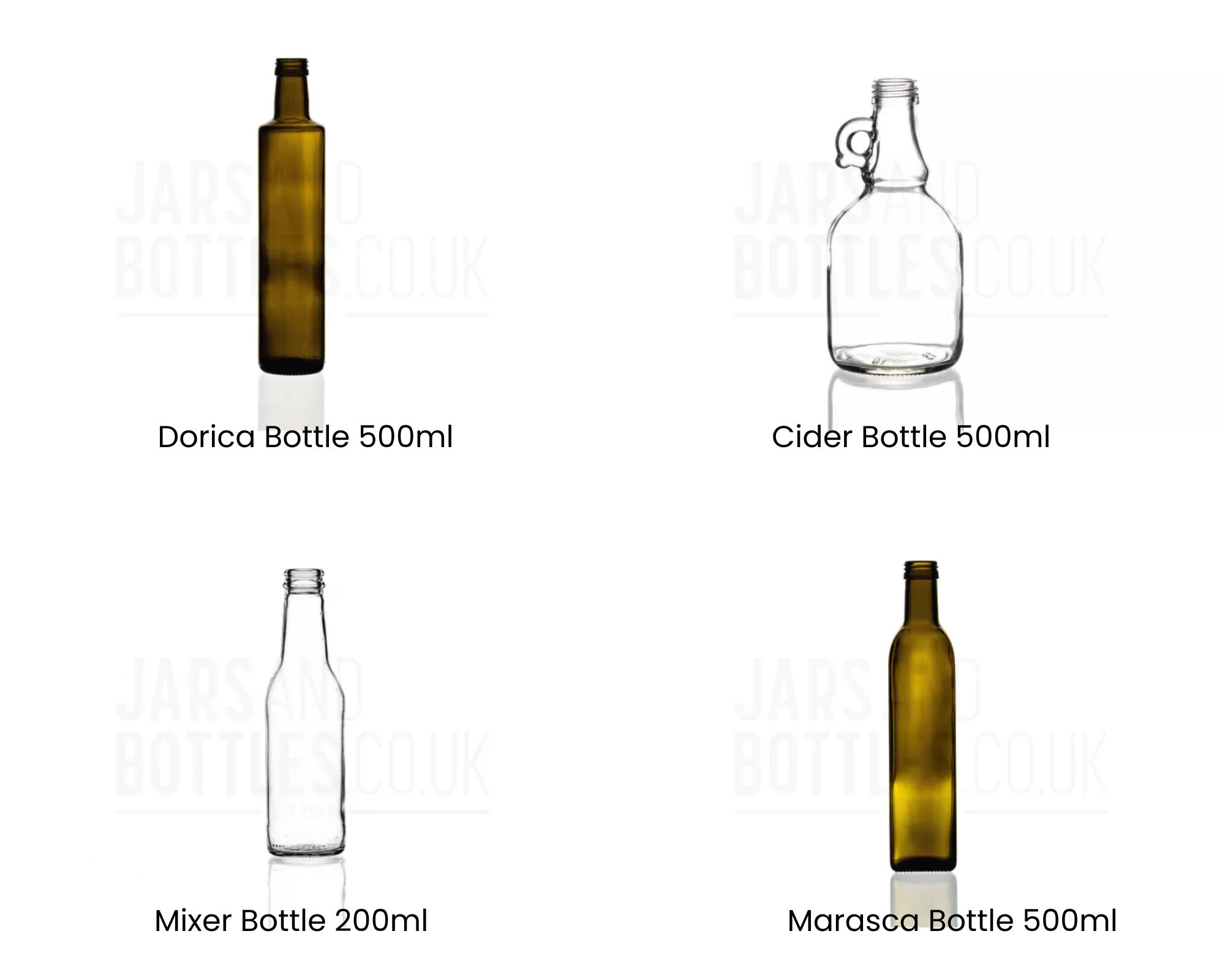
- Glass Cider Bottles
These classic, sturdy bottles come in 250ml and 500ml and are suitable for daily use or gifting. Their sizes showcase your infusions beautifully. - Glass Dorica Bottles
Available in 100ml, 250ml, and 500ml (in clear and green glass), Dorica bottles offer sleek design and controlled pouring. They are ideal for herb-infused oils and delicate vinegars. - Glass Marasca Bottles
Marasca bottles are space-saving, square, and come in 100ml, 250ml, and 500ml. Some have green-tinted options for extra light protection. - Glass Mixer Bottle (200ml)
This 200ml mixer bottle is a versatile option for oils, vinegars, or dressings. It is practical and stylish, perfect for both kitchen use and display.
Each bottle is designed to enhance and preserve your homemade infusions. Find the ideal match for your needs and start storing in style!
View the whole range:
Storing infused oils and vinegars the right way can make all the difference in flavour and safety. With the right bottles, proper storage, and a little care, your homemade infusions will add a gourmet touch to any dish. So grab those lovely bottles, clean them well, and start experimenting—your cooking will thank you!